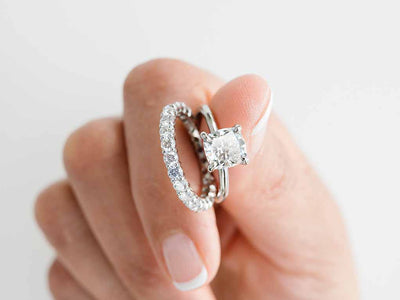

All over the globe and across time, people have been obsessed with gemstones. When you get a closer glimpse at the sparkling beauties, it’s easy to see why! From the emerald necklaces in Cleopatra’s collection to the colorfully bedazzled crowns worn by Queen Elizabeth I to the simple yet timeless pearl necklace worn by Jackie Kennedy, gemstone jewelry has remained desirable for generations of men and women.
If you’re interested in upgrading your current jewelry collection or searching for a once-in-a-lifetime present for the one you love, consider this your sign and start researching gemstone jewelry today. With countless brands and styles to choose from, you’re guaranteed to find a piece that perfectly represents you. Before you head to your favorite jewelry shop, take a look through this guide and gain an understanding of the most popular gems used today.

Is There a Difference Between Gemstones and Crystals?
Though the two terms are often used interchangeably amongst collectors and fashion-lovers, gemstones and crystals are not technically the same thing. Crystals are solid substances with three-dimensional arrangements of atoms, molecules, and ions, all of which are influenced by the conditions in which they grow. Gemstones tend to refer to the rocks, minerals, or organic materials that have been polished, cut, and faceted into different shapes and sizes. Both have their time and place in jewelry, but gemstones are the preferred choice for designer labels.
Precious vs. Semi-Precious Gemstones
Gemstones are divided into two main categories: precious and semi-precious. Semi-precious encompasses a wide variety of more common (yet still beautiful) gems, such as jade, turquoise, and opal. The term “precious,” on the other hand, is strictly used to describe the four rarest and most valuable stones: diamonds, rubies, sapphires, and emeralds.
The A-to-Z List of the Most Popular Gemstones for Jewelry
With somewhere between 200 and 300 varieties in the world, it would be impossible to get into the history and aesthetics of every single gemstone in existence—but we’ll give it our best try! Below you’ll find an A-to-Z list of the most popular gemstones used in fine jewelry.

Alexandrite
First discovered in the year 1830 in the Ural Mountains, Alexandrite is thought of as one of the most fascinating gemstones in the world. Though it can be lab-grown and exhibit the same brilliance and color range, the most valuable Alexandrite is formed deep in the earth over millions of years. Wearing Alexandrite, one of the birthstones for June, is thought to bring you harmonious relationships and good luck.
Alexandrite is a member of the chrysoberyl family (composed of beryllium, aluminum, and oxygen), but thanks to the presence of chromium, it is widely renowned for its unique ability to appear green in daylight and purplish red in incandescent light. This optical phenomenon is referred to as its “color change.” Other light sources can transform the hue even further, as seen in certain Alexandrite necklaces and Alexandrite earrings on the market, but the majority appear green to the naked eye.
Amazonite
Often confused with jade and turquoise due to their similarities in colors, Amazonite is set apart by its mirror-like sheen. A microcline form of the feldspar mineral, the naturally greenish-blue gem is found around the world, from Ethiopia to Colorado to Peru and beyond, and is most often used in beaded jewelry. If you’re interested in wearing an Amazonite necklace and bringing calm to your day-to-day, make sure to find one with protective settings, as it only ranks a 6 to 6.5 on the Mohs hardness scale.
[product_card border="#BDB39B" image="https://cdn.shopify.com/s/files/1/0046/4253/7587/files/NS412593_b186790a-7a18-49d0-a275-81938dcdc286.png?v=1761065629" alt_text="Roberto Coin Venetian Princess Amazonite and Diamond Flower Necklace in 18K yellow gold" eyebrow="Roberto Coin" product_name="Venetian Princess Amazonite and Diamond Flower Necklace" cta_url="/products/roberto-coin-venetian-princess-amazonite-and-diamond-flower-necklace" target="_blank" cta_text="Shop Now"]
Amber
Uniquely categorized as an organic gemstone, amber is fossilized tree resin that has hardened over millions of years. While amber can be found in a range of golden yellow, cognac red, white, milky-yellow, green, black, and even blue, the vast majority of specimens found are a glowing orange. Technically, transparent amber is more valuable than any with a cloudier appearance, but to many amber necklace collectors, it’s the plant or animal-caused inclusions that make the design exciting!
Tips for Wearing Amber Jewelry:
- Tip 1: Avoid exposing it to perfumes, hairspray, or lotions, as amber necklaces are prone to chemical damage.
- Tip 2: Store amber earrings away from strong heat sources or direct sunlight to prevent any potential cracking.
- Tip 3: To restore an amber ring’s luster, just rub in a tiny drop of olive oil with a soft cloth.
Amethyst
With a brilliant purple hue, amethyst is truly fit for royalty! A member of the quartz family and the official birthstone for February, amethysts can be found in pale lilac, vibrant indigos, and deep reddish-purple variations, each with its own time and place in contemporary jewelry lines. Some believe amethyst pendants can reduce stress, enhance mental clarity, and, if you subscribe to the old ways of thinking, protect you from inebriation (though we can’t make any promises).
The majority of amethysts used in necklaces and earrings are mined naturally in Brazil and Africa. There, formation starts with a slow crystallization of silica-rich hydrothermal fluids within the gaps of volcanic rocks. The depth of color is decided by the presence and concentration of iron impurities, as well as the intensity of radiation exposure from surrounding rocks.

Ametrine
Why choose a gem with one color when you could have one with two? If you’re looking to add a bit of glamour to your collection, search for the orange-purple hues of the ametrine, commercially found in eastern Bolivia.
The majority of ametrine necklaces, earrings, and rings feature rectangular step-cut shapes, as they emphasize the unique color palette. The larger the ametrine, the more saturated the hues—and the more valuable it becomes.
Aquamarine
Translating literally to water (“aqua”) and sea (“marina”), aquamarine was once believed to be mermaid treasure, worn by sailors to bid them luck on their journeys. Known best for its mesmerizing light-blue to sea-green hue, aquamarine is composed of beryllium, aluminum silicate, and trace amounts of iron, making it closely related to both emerald and morganite.
Heat treatment is often used to remove the yellowish tones and enhance the blue color of this March birthstone, in order to make it more valuable in the market. If you’re looking for a bit of calm in your collection, look for aquamarine bracelets and pendants with stones from Brazil, Malawi, Zambia, Nigeria, Madagascar, and Mozambique.

Bloodstone
Sometimes referred to as heliotrope, bloodstone is the traditional March birthstone. The dark green chalcedony stone contains rust-red stripes and spots, giving it a one-of-a-kind look unlike any other gem. Natural bloodstone takes millions of years to form and, unlike other stones, requires no treatment before it is used in jewelry design.
Note: If you’re searching for a rare bloodstone bracelet, ask your jeweler if they have access to any plasma bloodstone designs. This deep green variety is completely opaque and includes little to no red jasper inclusions.
Carnelian
As one of the more affordable chalcedony stones, carnelian is a favorite all over the globe. The highest quality carnelian is mined in India, Egypt, Brazil, and Uruguay, and though it is often confused with jasper, the two are very different. Carnelian can be found in a myriad of fiery, orange shades. If you’re searching for ways to boost creativity and physical vitality, consider sporting a carnelian bracelet as an everyday staple.
Citrine
If you’re in the market for a vibrant orange or yellow stone for your jewelry collection, consider citrine earrings. A member of the quartz family, this beautiful gem is often confused with topaz and yellow sapphire. But what many people don’t know is that it is more durable and affordable, making it a top-selling gemstone across the board.

Since naturally formed citrine is becoming increasingly rare, a large percentage of citrine necklaces and citrine earrings actually feature heat-treated amethyst. This is accomplished by heating the purple gem in a kiln and subjecting it to high heat, forcing the color to fade and turn golden. Before you buy, make sure you understand whether or not the stones have been treated—it could make a world of difference to the price.
Diamond
With a score of 10 on the Mohs hardness scale, diamonds are the hardest known naturally occurring material on Earth. This is due to the fact that they are made out of a single element at 99.95% carbon, with the other 0.05% including the occasional trace element, which can slightly affect color. In fact, diamonds are so hard that they can only be scratched by another diamond—no other material can manage it.
Diamonds may not be as meaningful and desirable as they are today had humans not started the tradition of proposing to their beloved with a diamond ring! As the birthstone of April and a timeless, typically colorless gem, diamonds remain a popular choice for everyday jewelry and special occasion pieces alike. When you’re searching for a design that is as enduring as it is stylish, sparkling diamond jewelry is the best way to go.
What are Fancy Color Diamonds?
A fancy diamond is a naturally formed diamond that exhibits a vibrant color outside the industry’s accepted D-to-Z scale. Believe it or not, these vibrant beauties are considered rare, with only one in 10,000 mined diamonds graded as fancy!

The more intense the color, the more valuable the diamond becomes. For those interested in a diamond bracelet or vibrant diamond ring with a bit more personality, fancy color gems are the way to go.
7 Popular Colors for Fancy Diamonds:
- Yellow: the color of these canary diamonds is brought about by the presence of nitrogen, but they are only categorized as fancy if they are more colorful than the standard range
- Pink: the pinkish hue is thought to be caused by a distortion in the crystal color centers that allows a selective absorption of light in the visible region
- Blue: shades of blue are generated by either radiation exposure or boron impurities; these diamonds are often discovered in India
- Black: black diamonds are produced by large, concentrated quantities of minute mineral inclusions extended throughout the stone
- Brown: mocha diamonds are caused by internal parallel brown grain lines in the arrangement of internal molecules (were not popular until they were rebranded as romantic in the ‘80s)
- Red: red is the rarest fancy color diamond, and the cause for the color is undetermined
- Green: a green diamond occurs when radiation displaces carbon atoms from their expected position in the crystalline structure; they’re commonly found when diamond deposits are near radioactive rocks
Emerald
Emeralds, a variety of the mineral beryl, are one of the four precious gemstones and are often even rarer than diamonds. The most desirable gems for emerald necklaces and emerald earrings are transparent, with an even color distribution, and hues ranging from bluish green to pure green. Most emeralds are cut with the aptly named emerald cut, developed in the 1500s to prevent the delicate stone from breaking during faceting and prioritize the rich hue, rather than sparkle.

When it comes to gifting, nothing beats emerald rings or emerald bracelets! Whether you’re celebrating your 55th wedding anniversary with the love of your life or choosing a birthstone jewelry gift for your daughter born in May, emerald jewelry never fails to impress.
Top Places Where Emeralds are Mined:
- Colombia: known for the finest quality emeralds, with pure, vivid green colors and minimal secondary tones (specifically the Muzo, Chivor, and Coscuez mines)
- Zambia: known for producing gems with deep bluish-green hues and excellent clarity, especially from the Kagem mine, one of the largest emerald mines in the world
- Brazil: renowned for discovering more affordable emeralds in Minas Gerais and Bahia mines, with a wide variety of colors and qualities ranging from lighter green to yellow-green
- Afghanistan: praised for producing some of the rarest emeralds at high altitude mines in the Panjshir Valley, with rich green tones and unmatched clarity
- Ethiopia: a newer source known for offering vivid and intense emeralds that require no oil treatment
Garnet
Garnet, the January birthstone, is a large family of silicate minerals. While it can occur naturally in a wide array of colors, the deep-red hue is the most favored option, as it resembles rubies without the high price tag. Historically used to symbolize loyalty, affection, and friendship, garnet earrings and garnet bracelets make a lovely gift for your nearest and dearest.
[product_card border="#BDB39B" image="https://cdn.shopify.com/s/files/1/0046/4253/7587/files/NS473586_7b4ce96c-e2e8-4f65-b30e-84d9c592a6be.jpg?v=1770823979" alt_text="Sabel Collection Yellow Gold Beaded Huggie Hoop Earrings with Garnet" eyebrow="Sabel Collection" product_name="Beaded Huggie Hoop Earrings with Garnet" cta_url="/products/yellow-gold-beaded-huggie-hoop-earrings-with-garnet" target="_blank" cta_text="Shop Now"]
Iolite
Iolite is a gem-quality variety of cordierite. Seen mainly in jewelry from 18th-century Europe, the blue-violet stone is known for its ability to look like different colors from different angles. Affordable, durable, and oh-so-striking, iolite bracelets and rings continue to be a jewelry-box essential for people who love a vibrant splash of color.
Jade
Jade can refer to two different materials: jadeite and nephrite, both with equal beauty and value. The best jadeite is semi-transparent and boasts the specific, pale green hue jade is known for today.
With a smooth and soft feel, jade is seen throughout history in carvings, weapons, and jewelry, and is deeply valued as a symbol of prosperity. Wearing a jade necklace or jade pendant is thought to bring you spiritual protection.
Kunzite
Renowned for its intense pink and violet hues, kunzite is the best-known variety of the mineral spodumene. The presence of manganese gives the stone its unique coloration and its ability to display phosphorescence after being exposed to UV or sunlight. Though rarely used in the high-end jewelry world, its value amongst gemstone collectors makes it well worth including in this list.
Lapis Lazuli
No other gem has as deep a blue hue as the metamorphic rock known as lapis lazuli. The majority of stones contain white calcite specs or golden pyrite veins, giving each one a magical look. The value is affected by both the number of inclusions and the quality of polish. If a stone is deemed unworthy for a lapis lazuli ring or pendant, it can still be polished as a palm stone or décor piece.

Moonstone
Ethereal, luminous, captivating—just some of the many words used to describe moonstone. Though somewhat delicate, moonstone has remained a popular choice for jewelry designers for decades.
Formed with alternating layers of orthoclase feldspar and albite, the structure is one-of-a-kind, giving each stone a shimmering, iridescent effect unlike anything else. Sporting a moonstone ring or moonstone necklace is thought to bring fertility and love to the wearer.
Onyx
The darkest form of chalcedony, onyx has contrasting layers of color, giving it a dramatic and bold look. While it can be found in other colors, the most popular option for jewelry making is the jet-black hue.
It is formed naturally from calcite in caves around the world and can be banded or completely monochromatic. With a 6.5 to 7 rating on the Mohs hardness scale, onyx rings and onyx necklaces are the perfect choice for anyone looking for everyday jewelry that’s made to last.

Opal
Best known for its brilliant display of flashing colors, opals have been a treasured gemstone for thousands of years. The fiery gem can occur naturally (most often in Australia), with water running through the earth and picking up silica particles before it’s deposited into sedimentary cracks, or grown in a lab, but either way, the scintillating iridescence known as the “play-of-color” remains impressive! There’s no better gift for those born in October than an opal birthstone ring or pendant necklace.
Play-of-Color Patterns Found in Opals:
- Pinfire: small, close-set patches
- Harlequin: angular, board patches, similar to a mosaic
- Flame: sweeping streaks that spread across the stone
- Peacock: strictly blue and green patterns
Pearl
As far as gems go, pearls are the only ones formed within a living creature. When an irritant enters a mollusk, it coats the foreign substance with nacre, a combination of calcium carbonate and proteins, adding layer upon layer until it gradually forms a pearl. The entire process for the traditional June birthstone takes about two to four years from start to finish, but, as you can see when picking out pearl jewelry, the outcome is well worth the wait.

What is the Difference Between Natural and Cultured Pearls?
When it comes to buying a pearl strand necklace or pearl earrings, one of the main concerns is whether or not the opalescent gems were naturally formed or cultivated—but what’s the difference? Natural pearls are formed entirely by chance in the wild and are becoming increasingly scarce, making them prized amongst jewelers and designers alike.
Cultured pearls are made at human-led pearl farms where workers introduce irritants to each shell. The end result is virtually identical to natural pearls, but they are far more accessible.
Popular Pearl Colors:
- White
- Pink
- Black
- Cream
- Blue
- Gold
- Copper
- Brown
- Green
- Yellow
- Purple
Peridot
Peridot, the beloved birthstone for August, is easily recognized by its typically lime green hue. Unlike other gems, this signature color comes from the mineral’s composition, rather than trace impurities, ensuring a consistent and beautiful look with every stone.

It is also one of the few gemstones formed deep within the earth’s mantle and brought to the surface by volcanic activity. Once believed by ancient Egyptians to protect their wearers against evil, peridot pendants and peridot earrings are the perfect way to add a meaningful flash of style to your outfit.
Rose Quartz
If you’ve ever tried to experience the power of healing crystals, you’ve likely already heard of the beautifully pink rose quartz. This hazy-to-translucent stone is found in Brazil, Madagascar, and South Dakota, and is either carved into unique shapes for pendants or cut and polished into beads. While it may not be considered precious or even semi-precious, no list of gems would be complete without discussing the stone of “unconditional love.”
Ruby
A sister to the sapphire, rubies are a specific variety of the corundum mineral renowned for their rich red hue and lasting durability. Natural rubies take anywhere from 20 to 30 million years to form, with the color determined by the presence of chromium during early stages deep beneath Earth’s crust. The higher the chromium content, the more intensely saturated the gem becomes.
Once worn by ancient Burmese warriors who believed ruby necklaces would grant them invulnerability in war and by ancient Indians who claimed ruby rings had the absolute power to strengthen the heart and aid bleeding disorders, rubies have remained a symbolic gem for thousands and thousands of years. Nowadays, if you’re seen wearing a ruby bracelet or sporting a pair of ruby earrings, people would probably assume it’s for a July birthstone or a 40th wedding anniversary gift.
[product_card border="#BDB39B" image="https://cdn.shopify.com/s/files/1/0046/4253/7587/files/Sabel-Collection-Yellow-Gold-Ruby-Stud-Earrings.jpg?v=1756403815" alt_text="Sabel Collection Yellow Gold Ruby Stud Earrings" eyebrow="Sabel Collection" product_name="Yellow Gold Ruby Stud Earrings" cta_url="/products/yellow-gold-ruby-stud-earrings" target="_blank" cta_text="Shop Now"]
Countries Where Rubies Have Been Discovered:
- Myanmar
- Mozambique
- Sri Lanka
- Madagascar
- Greenland
- Afghanistan
- Tanzania
- Pakistan
Sapphire
The September birthstone, sapphire, gives feeling blue a whole new meaning. While they can be found in a variety of colors (known as fancy sapphires) in countries like Myanmar, Sri Lanka, and Australia, the majority of sapphires boast a beautiful blue hue, caused by trace elements of iron and titanium sneaking their way into the corundum mineral during formation. Sapphires rank a 9 on the Mohs scale, second only to diamonds, making them a perfect choice for daily wear in designs such as sapphire engagement rings, earrings, or necklaces.

Sardonyx
The traditional birthstone for August, the banded variety of chalcedony known as sardonyx, has been used mainly in cameo pendants, beaded bracelets, and signet rings. The distinctly parallel bands and red, orange, and white hues help this stone stand out in a collection.
In the past, people wore sardonyx jewelry for courage on the battlefield. Now, sporting a sardonyx ring may just mean you’re looking for a confidence boost.
Spinel
Mined mainly in Sri Lanka, Vietnam, Thailand, and Afghanistan, the brilliant oxide mineral known as spinel can be discovered in a wide range of colors, including violet, red, blue, green, and black. Once polished, a spinel stone can be nearly indistinguishable from ruby but priced at a much more affordable cost. It was added as a modern birthstone, making spinel earrings or a spinel ring the perfect gift for your August-born companions.
Sunstone
Sunstone, a variety of plagioclase feldspar, is best known for its unique, sparkly appearance. This lively, glittery effect is called aventurescence and is caused by small mineral inclusions such as copper or hematite within the structure. Loved for its golden shimmer and found in red, orange, pink, yellow, and occasionally blue-green, this natural gemstone is closely associated with the sun and thought to manifest positivity and joy for the wearer.

Tanzanite
The striking blue-violet beauty known as Tanzanite belongs to the zoisite mineral family and is one of the rarest gems on Earth. Mined exclusively in one small area in Northern Tanzania, near Mount Kilimanjaro, the December birthstone was first discovered in 1967 and has continued to become one of the most sought-after pieces for fine jewelry designs.
Stones that lean more purple and are generally more affordable, while stones with a saturated royal blue hue are more valuable. Tanzanite’s color can appear different in certain lighting conditions, a phenomenon known as pleochroism.
Topaz
If you were born in November, you’re likely already aware of the striking topaz. While pure topaz mined in Brazil, Mexico, Russia, or Nigeria is completely colorless, most topaz is treated to produce vibrant blues, pinks, reds, browns, and yellows, with the most prized and rare being the deeply golden-orange imperial topaz. At an 8 on the Mohs hardness scale, topaz earrings and topaz necklaces are often worn as day-to-day designs, but be careful—with a perfect cleavage, topaz stones can be chipped or cracked if hit hard enough.
Tourmaline
Did you know that tourmaline, one of the October birthstones, can be found in more color varieties than almost any other gemstone? The complex borosilicate mineral group is often formed in elongated triangular crystals with multiple colors and is uniquely charged both when heat (pyroelectric) and pressure (piezoelectric) are applied. Thanks to the vast range of hues and high ranking of 7 to 7.5 on the Mohs scale, tourmaline rings, necklaces, and bracelets are some of the most versatile and timeless options on the market.

Types of Tourmaline:
- Schorl tourmaline (black)
- Rubellite tourmaline (red or pink)
- Verdelite tourmaline (green)
- Indicolite tourmaline (blue)
- Watermelon tourmaline (green outer ring, pink center)
- Paraiba tourmaline (rare copper and neon blue-green)
Turquoise
With a vivid greenish-blue hue and an opaque look, turquoise, one of December’s birthstones, is easily identifiable in the jewelry world. The hydrated phosphate of copper (responsible for the blue) and aluminum (responsible for the green) forms in arid environments and often features an intricately webbed pattern called the “matrix.”
As a naturally porous rock, the majority of turquoise stones must be stabilized with resin before being used in jewelry. If you’re looking for a protection talisman or good luck charm, consider buying a turquoise necklace or turquoise bracelet.
Zircon
Not to be confused with cubic zirconia, a popular alternative to diamonds, zircon is proven to be the oldest known mineral on Earth. The natural and durable gem is praised for its high brilliance and can be treated to result in bright blue, white, green, and golden colors. While it’s not widely used in luxury jewelry, those born in December or collectors looking for historically significant pieces should consider buying zircon rings, necklaces, and earrings.
[product_card border="#BDB39B" image="https://cdn.shopify.com/s/files/1/0046/4253/7587/files/D35090M88BNJ.f.jpg?v=1708534403" alt_text="Chevron Tag in 18K Yellow Gold with Nephrite Jade, 21mm" eyebrow="David Yurman" product_name="Chevron Tag in 18K Yellow Gold with Nephrite Jade" cta_url="/pages/david-yurman?path=/products/D35090M88BNJ" target="_blank" cta_text="Shop Now"]
Why Are There Two Birthstone Lists?
When jewelry shopping for you or a loved one, you may notice that there are two different birthstone lists. After years of confusion over different interpretations and cultural opinions on which stone should be ascribed to which country, the National Association of Jewellers set out to standardize expectations, releasing a new, official list in 1912.
This traditional list was revised in 1952, giving us the modern version that’s popular today. While the traditional list is still used, the majority of the world considers the modern one to be more accurate.
Traditional Birthstone List:
- January: Garnet
- February: Amethyst
- March: Bloodstone
- April: Diamond
- May: Emerald
- June: Pearl
- July: Ruby
- August: Sardonyx
- September: Sapphire
- October: Opal
- November: Topaz
- December: Lapis or Turquoise

Modern Birthstone List:
- January: Garnet
- February: Amethyst
- March: Aquamarine
- April: Diamond
- May: Emerald
- June: Alexandrite
- July: Ruby
- August: Peridot or spinel
- September: Sapphire
- October: Tourmaline
- November: Golden Topaz or Citrine
- December: Blue Zircon, Blue Topaz, or Tanzanite
When it comes to gemstone jewelry, the options are endless. Shop around for the perfect precious gemstone engagement ring for your beloved or a pair of birthstone earrings for formal occasions. We hope it’s easier to find your favorite stones when you have our handy list at your disposal!